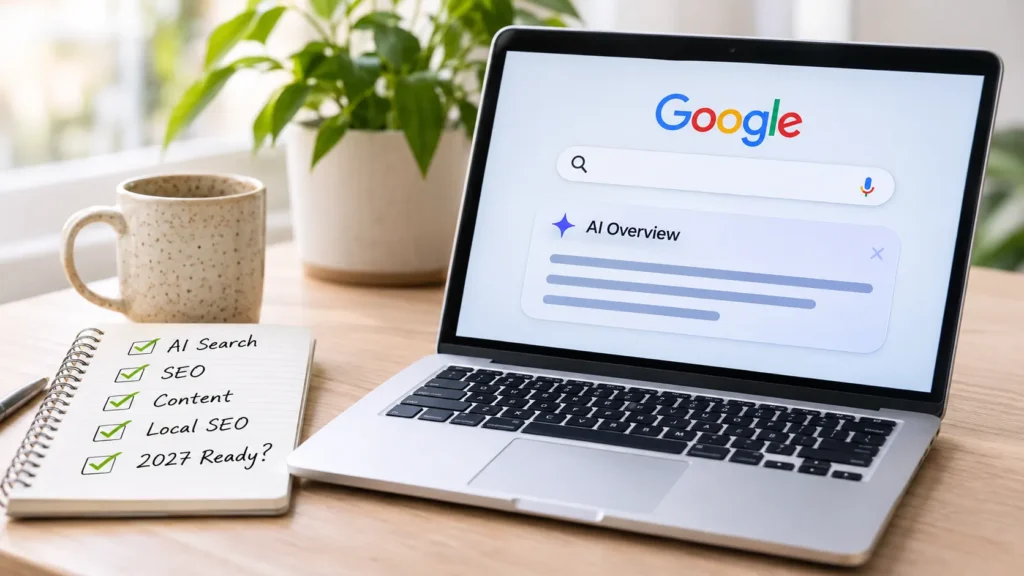
AI is changing how customers search for businesses online. Here’s what Australian small business owners need to know — and 10 practical steps to help their websites stay visible in 2027.
Remember when getting found on Google was mainly about ranking on page one?
These days, customers are increasingly asking AI tools questions such as:
“Who’s a reliable website designer on Sydney’s Northern Beaches?”
“What’s the best air conditioning system for a coastal home?”
“Can you recommend a local accountant for a small business?”
“Which provider offers the best value for my needs?”
Instead of scrolling through pages of search results, people can receive an AI-generated answer, sometimes complete with recommendations and links to businesses.
For small business owners, this creates both opportunities and challenges.
The good news? You don't need to throw out your existing SEO strategy or invest in expensive AI-specific tricks.
Google’s updated 2026 guidance confirms that traditional SEO remains fundamental to visibility in its AI-powered search experiences.
At Smart Robbie, we believe the smartest approach is to build on what already works: a technically sound website, helpful content, clear business information and a strong online reputation.
Here’s how to prepare your website for 2027.
What is AI search, and why does it matter?
Google’s updated 2026 guidance confirms that traditional SEO remains fundamental to visibility in its AI-powered search experiences.
At Smart Robbie, we believe the smartest approach is to build on what already works: a technically sound website, helpful content, clear business information and a strong online reputation.
Here’s how to prepare your website for 2027.

Google AI Overviews:
AI-generated summaries appearing within certain Google searches.

Google AI Mode:
A more conversational search experience where people can ask detailed questions and follow-up questions.

ChatGPT (OpenAI):
An AI assistant that can search the web and provide answers, recommendations and links.

Claude (Anthropic):
An AI assistant that can search the web, research topics, compare options and provide recommendations supported by online sources.

Perplexity:
An AI-powered answer engine that searches the web and provides answers with references to its sources.

Microsoft Copilot: Microsoft’s AI assistant, available through Bing, Edge and Microsoft products, helping users research topics, compare services and discover information from across the web.
Traditional search typically presents a list of websites for people to explore.
AI search can bring information together from multiple sources and present a more direct answer.
Imagine someone searching for a local builder.
Rather than simply typing “builders Northern Beaches”, they might ask:
“Can you recommend a builder on Sydney’s Northern Beaches who specialises in high-end home renovations?”
That question provides much more context about what the customer actually wants.
Businesses with clear service descriptions, relevant project examples, credible reviews and useful website content may be better positioned to be discovered.
However, appearing in an AI-generated answer is never guaranteed.
Is traditional SEO still important in 2027?
Absolutely.
In May 2026, Google published updated guidance explaining that its generative AI search features continue to rely on its core search ranking and quality systems.
Google uses techniques including retrieval-augmented generation, which helps ground AI answers in information retrieved from its search index.
It also uses query fan-out, where a complex question can trigger several related searches to gather useful information.
In plain English, Google still needs to discover, understand and evaluate your website before it can consider your content for its AI search features.
That means familiar SEO activities remain important:
Making sure Google can crawl and index your pages.
Creating genuinely helpful, original content.
Building clear website navigation and internal links.
Demonstrating your experience and expertise.
Maintaining accurate business information.
Providing a fast, mobile-friendly website.
You’ll also hear terms such as Answer Engine Optimisation (AEO) and Generative Engine Optimisation (GEO).
These describe efforts to improve visibility in AI-generated answers.
They’re useful concepts, but they aren’t replacements for SEO. For most small businesses, the fundamentals should still come first.
How do AI search engines find information about your business?
Different AI platforms work differently, but they can draw on several types of information.
Your website: Service pages, blog articles, FAQs, product information and project examples help explain what your business does.
Search indexes: Search engines discover and organise publicly accessible web pages, which can then support AI-generated responses.
External sources: Relevant websites, industry publications, reviews and business listings can provide additional context about your business.
Business information: Your Google Business Profile, location details, opening hours and contact information can help people discover local services.
One important distinction: Google AI Overviews, ChatGPT and other AI tools don’t all use identical systems or sources.
There’s no universal submission process that guarantees inclusion across every AI platform.
Your best starting point is making your business information accurate, accessible, useful and consistent.
Your practical 10-point AI search checklist for 2027
You don’t need to complete everything overnight. Start with the areas most likely to improve your customers’ experience and your existing search visibility.
1. Make sure your website can be found and indexed
Before worrying about AI search, check whether search engines can access your website.
Use Google Search Console to identify indexing problems, crawl errors and important pages that aren’t appearing in Google.
Check that your website isn’t accidentally blocking search engines through its robots.txt file, page settings, hosting configuration or security tools.
For Google’s AI search features, eligible pages generally need to be indexed and able to appear in Google Search with a snippet.
Your Action:
Check Google Search Console and confirm your most important service pages are indexed.
2. Clearly explain what your business does
Don’t make customers — or search engines — guess what you offer.
Every important service should have a dedicated, well-structured page explaining:
What the service includes.
Who it’s designed for.
The problems it solves.
Where you provide the service.
Why customers should choose you.
How to enquire or get started.
For example, a page titled “Our Services” is less descriptive than a dedicated page explaining “WordPress Website Maintenance for Australian Small Businesses”.
Clear, specific information helps visitors understand whether your business meets their needs.
Your Action:
Review your main service pages and make sure each answers the questions a potential customer would ask.
3. Create genuinely useful, original content
AI tools can produce generic information very quickly.
Your competitive advantage is the knowledge and experience you’ve developed by actually working in your industry.
Google’s 2026 guidance emphasises the importance of unique, valuable content rather than information that simply repeats what’s already available.
Consider publishing:
Answers to common customer questions.
Real project examples and lessons learned.
Comparisons between products or services.
Practical buying guides.
Industry-specific advice.
Explanations of common mistakes.
A plumber explaining what causes recurring blocked drains can offer more useful insight than another generic article about plumbing services.
Your Action:
Identify five questions customers regularly ask and turn the best ones into helpful website content.
4. Demonstrate experience and credibility
Customers want confidence that they’re dealing with a genuine, capable business.
Google’s guidance on helpful content encourages website owners to demonstrate first-hand experience, expertise and trustworthiness.
You can strengthen these signals through:
Detailed About and team pages.
Genuine customer testimonials.
Relevant qualifications and industry memberships.
Project portfolios and case studies.
Clear contact and business information.
Author information where appropriate.
These elements help customers evaluate your business and provide useful context for search systems.
Your Action:
Update your About page and add recent, genuine examples of your work.
5. Strengthen your local SEO
For Australian businesses serving specific suburbs, cities or regions, local visibility remains essential.
Keep your Google Business Profile accurate and complete.
Ensure your business name, address where applicable, phone number, services and opening hours are consistent across your website and important listings.
If you genuinely service multiple areas, create useful location-specific content where it adds value.
Avoid generating dozens of nearly identical suburb pages simply to target more keywords.
Your Action:
Review your Google Business Profile, respond to recent reviews and check your key local business listings.
6. Use structured data where appropriate
Structured data, often called schema markup, helps search engines understand specific information on a webpage.
Depending on your website, relevant types might include:
LocalBusiness or Organisation.
Service-related information.
Product.
Article.
BreadcrumbList.
Structured data can support existing search features, but it isn’t a shortcut into AI answers.
Google specifically confirms that no special AI schema is required for its generative search features.
Any structured data you implement should accurately reflect the content visitors can see.
Your Action:
Check your existing structured data and fix errors or misleading information.
7. Improve your website's technical health
A slow, outdated or difficult-to-navigate website can frustrate visitors regardless of how they found you.
Important areas include:
Mobile usability.
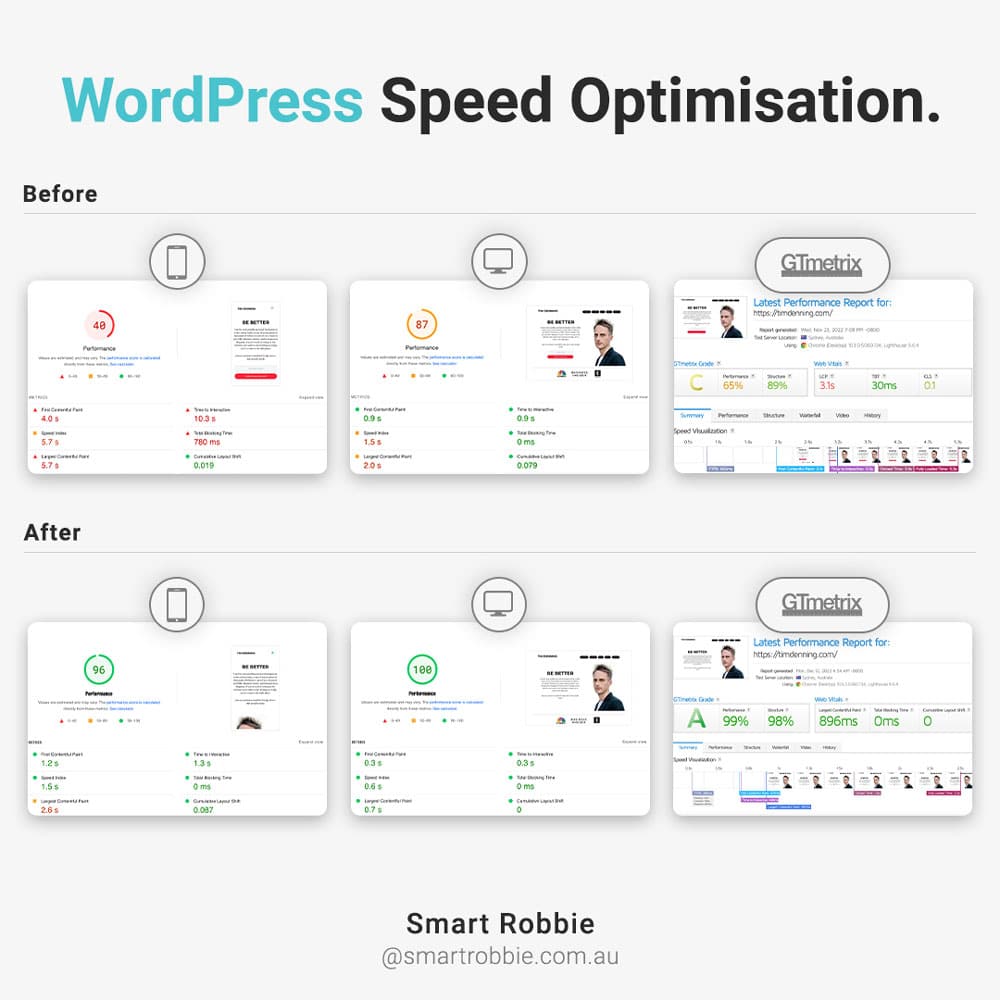
Loading performance.
Secure HTTPS connections.
Clear navigation and internal links.
Accessible, readable page content.
Working links and forms.
Regular WordPress, plugin and security updates.
Important content should also be available as readable text, rather than hidden inside images or difficult-to-access elements.
Your Action:
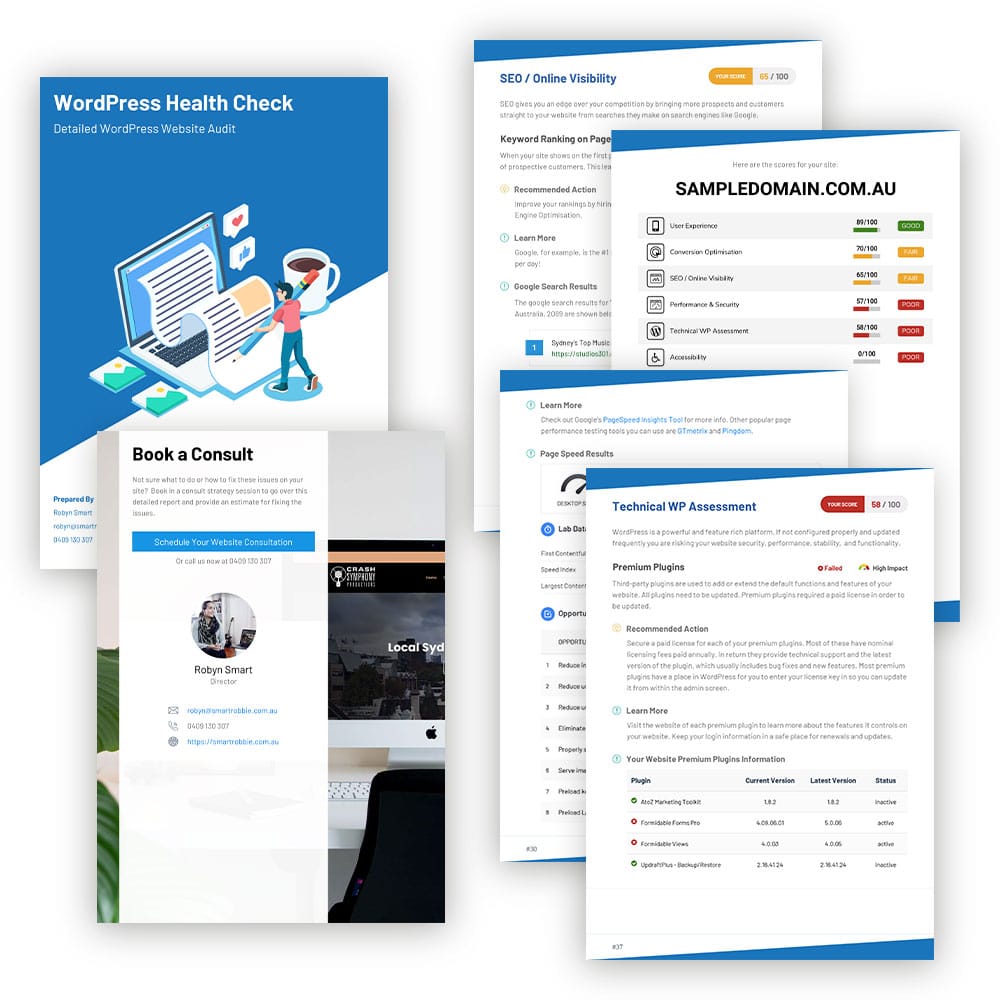
Run a website health check and prioritise issues affecting usability, security and search engine access.
8. Make your content easy to understand
You don’t need to rewrite every page into short, robotic answers for AI.
Google has explicitly said that breaking content into tiny sections solely for AI isn’t necessary.
However, good content structure makes information easier for people to read.
Use descriptive headings, straightforward explanations, useful examples and natural language.
Where relevant, answer a question directly before providing more detail.
For example:
How often should a WordPress website be updated?
WordPress websites should be monitored regularly, with core, theme and plugin updates applied safely and promptly, particularly when security vulnerabilities are identified.
You can then explain the risks, update process and benefits of professional maintenance.
Your Action:
Review your three most important pages for clarity, readability and helpful answers.
9. Build your reputation beyond your own website
Your website shouldn’t be the only place customers can learn about your business.
Relevant external references can strengthen your wider online presence.
Consider opportunities such as:
Industry association listings.
Genuine customer reviews.
Local business partnerships.
Relevant publications and interviews.
Supplier or professional directories.
Quality backlinks from reputable websites.
The key is relevance and authenticity.
Paying for hundreds of low-quality directory submissions or manufactured brand mentions isn’t a credible AI search strategy.
Your Action:
Identify three reputable websites or organisations where your business should genuinely be represented.
10. Measure performance and keep improving
AI search is evolving, so measurement matters.
Start by tracking what already contributes to business growth: organic traffic, enquiries, bookings, purchases and leads.
Then add AI-specific visibility reporting where available.
Look for patterns over time rather than expecting immediate results from individual changes.
Your Action:
Set up a monthly SEO and AI search review that focuses on business outcomes, not just rankings.